Students are setting up their science experiments tomorrow. Today we looked closely at science reports written by former students on other topics, honing in on the key features of this genre. Students have formed pairs or groups of three to explore some aspect of mould growth in bread. They have to design a fair test. Here are the expectations for the report. We read this through as a class and discussed the more challenging aspects.
Group 2: sometimes it is best to turn off the flash
Group 2
Group 9
Group 9
Sorry guys, I can only put up the photos minus people, remember this is a science report not a who's who for The Mercury social pages. We need photos of the mould growth.
Group 8
Group 8
Group 8
Group 8
The most important thing: occasionally take some calculated risks and learn from your mistakes.
Our current class novel is the classic The Snow Goose, written by PaulGallico. I have five different editions from my book collection in circulation in the classroom, including one from 1942 which was very dear to my mother's heart. I like to use books that students wouldn't normally pick up themselves to read in order to expose them to challenging texts and genres of which they may not be aware. (For example, last year we read and studied a recent release graphic novel based on the Gallipoli campaign.) Our next major art and literacy assignment will centre around this short but complex novel set in World War II. Students will design a cover for a new edition of the book and write a blurb promoting the book. We have been collecting feathers so if students wish to add a printing aspect to their artworks they can. Otherwise, they can employ whatever medium they like. In the classroom we have a range of charcoals, oil pastels, Derwent pencils, water colours, marker pens, ink pens, and acrylic paints. These materials will be introduced to them to these this week.Two students are currently trialling some black acrylic printing techniques using feathers.
On Monday students also started their "Texts I Have Read in 2014" listing in their Literacy books. I have requested they update this list this Wednesday as their homework task. Students will be doing a comparison of this novel with Storm Boy by Colin Thiele.
Update: Tuesday 4th March
This morning the grade five students viewed the first three parts of The Snow Goose. I suggest that the grade six students try to watch these clips at home as they were pretty much out the whole day doing their daily phys.ed leadership training with Mr Smith.
Update
All students except one (who is on a family holiday for two weeks) has now viewed three parts of the black and white movie.. Update: Tuesday 11th March
Today I brought my record player into the classroom and students listened to the record The Snow Goose. It follows the originally story fairly closely and was adapted by Nat Wolff. This afforded some students an opportunity they had not as yet experienced: to listen to a vinyl. We discussed terma like melodramatic and talked about dramatisations. This story was dramatised by Herbert Marshall and Joan Loring.
Update 17th March: Art works inspired by the novel
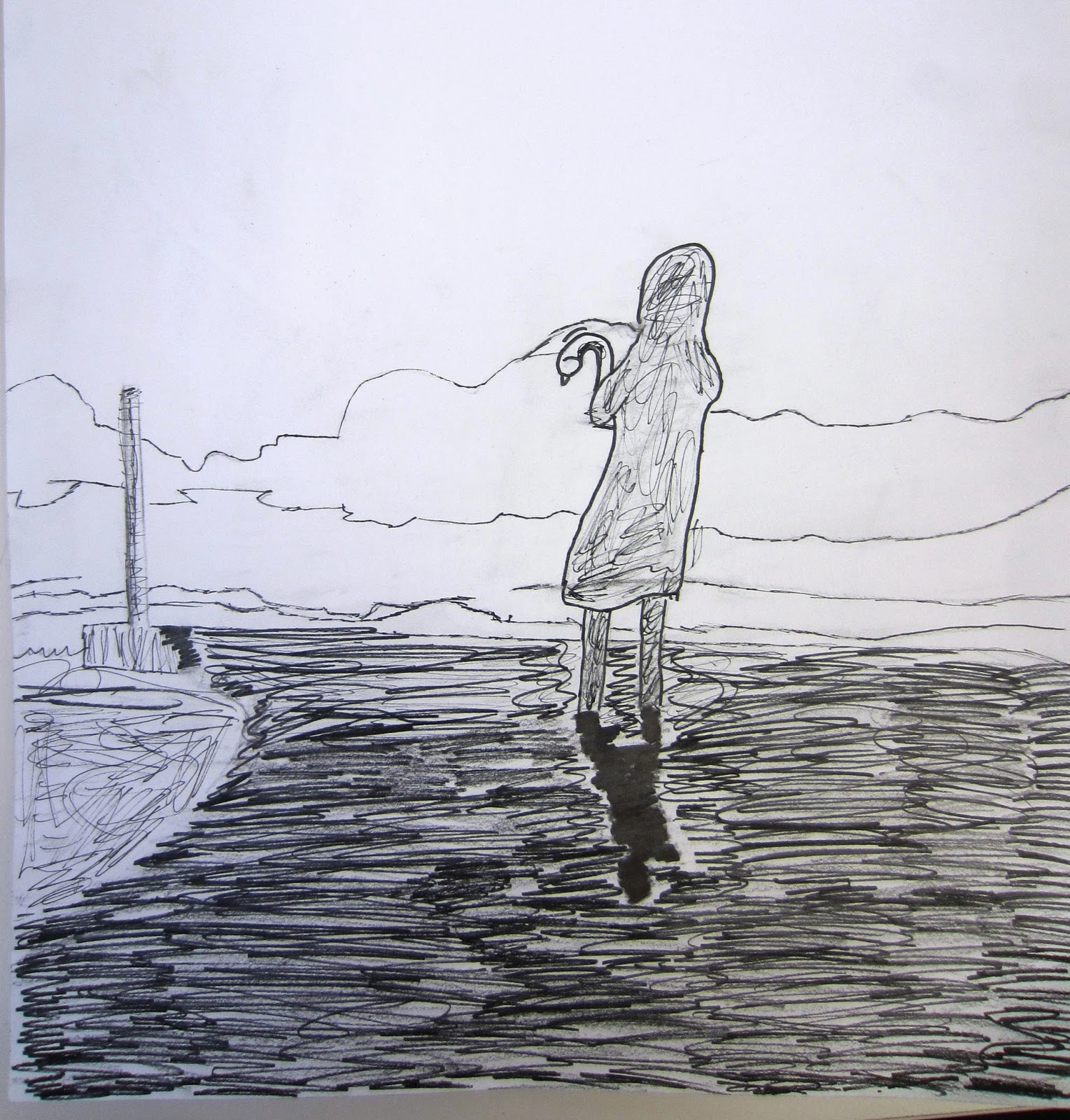
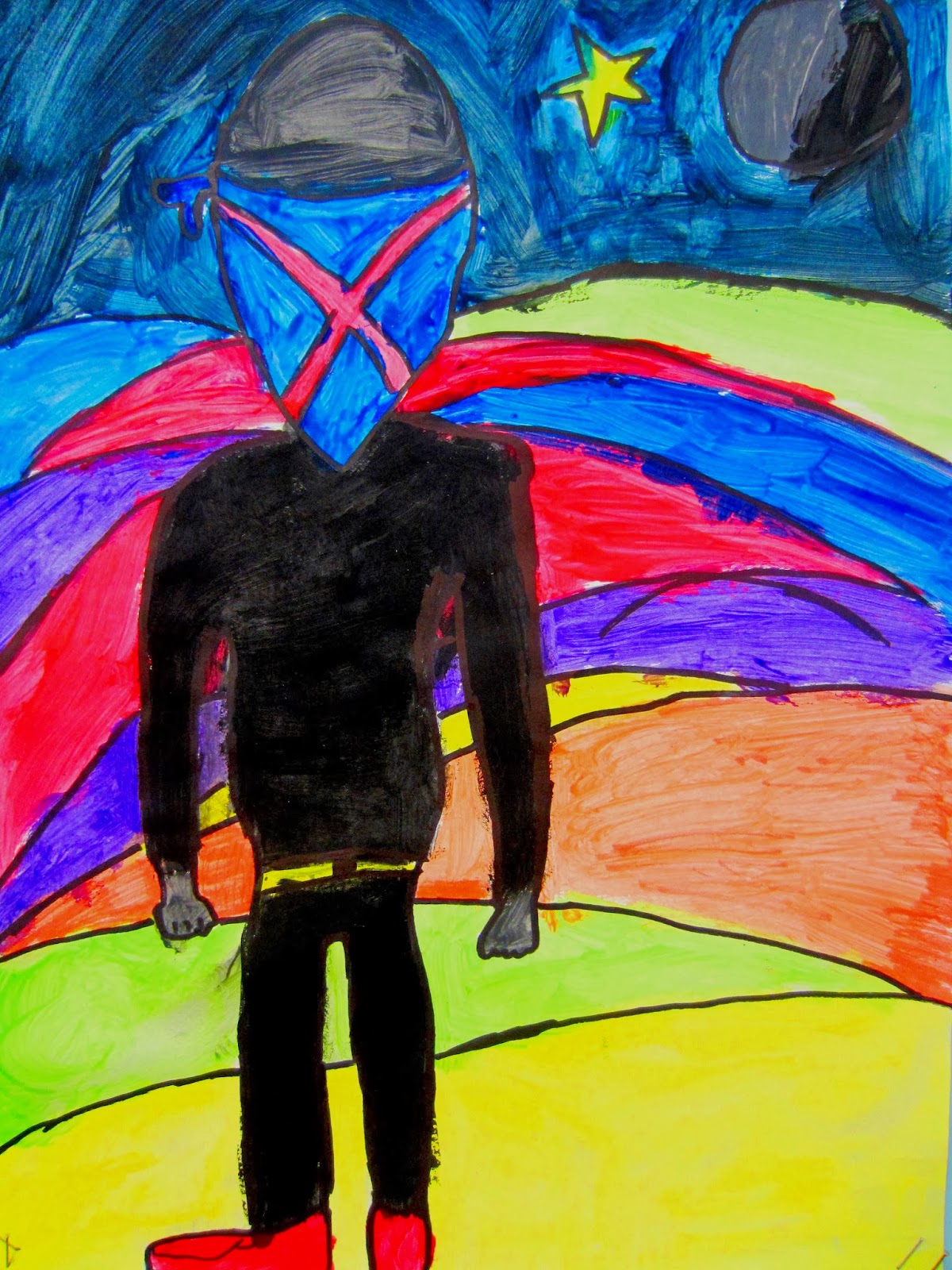
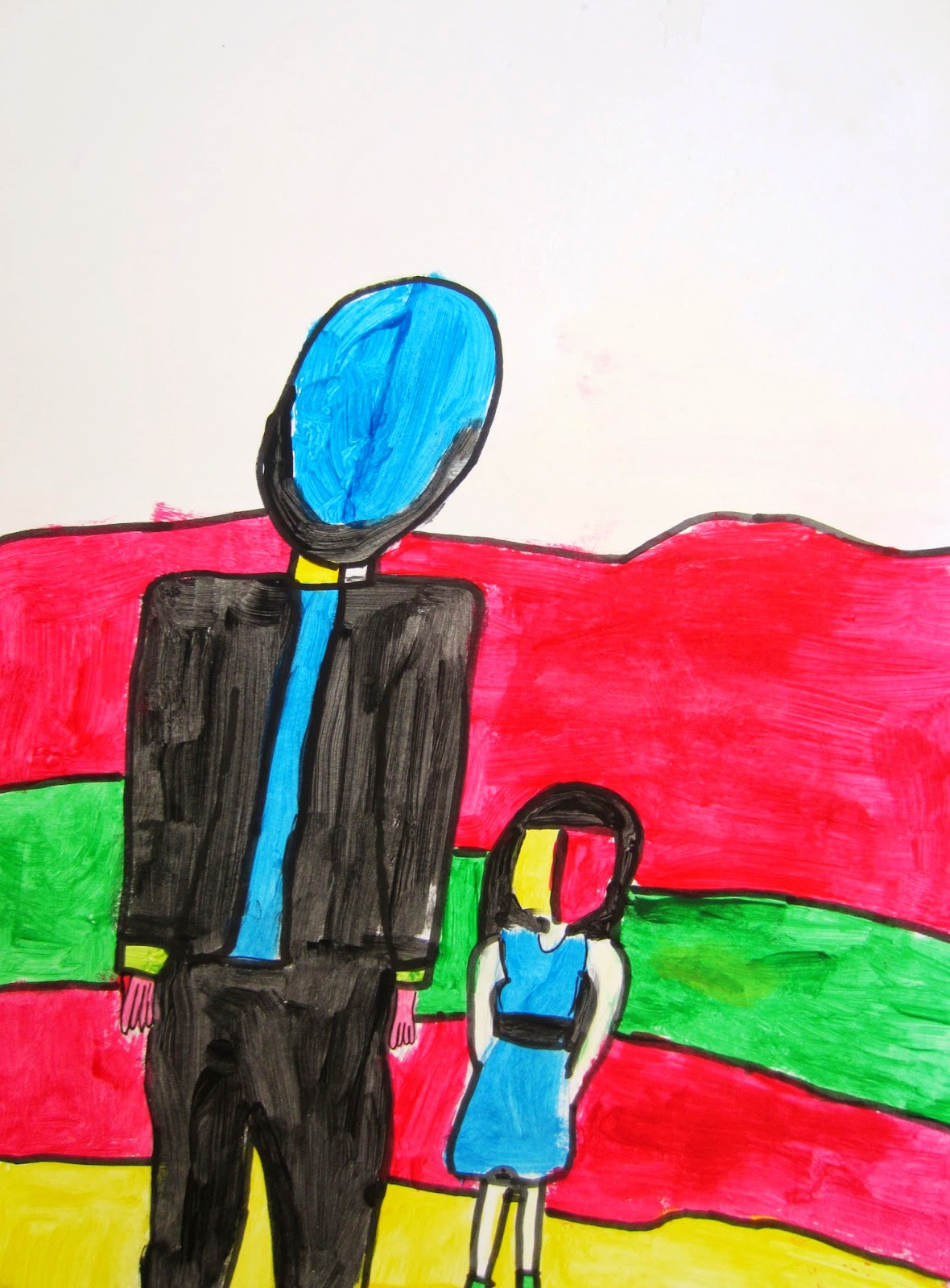
These last two weeks we have focused on works done by Kazimir Malevich, a well known Russin artist. Here are some of the students' finished pieces. There are more to come. Parents are quite welcome in the classroom any time they please, to browse, watch a lesson or to assist.
Works in progress, using acrylic paints and cartridge. Students prepare a plan/design before commencing.Wooden models scattered around the desks also assisted some artists with the proportion of limbs.
Not sure why Leeuwenhook found his way amongst Malevich's in progress...but the colours fit.
Finally, getting some student-driven displays up
UPDATE 6/03/14
Students shared these in the whole school assembly today.
This week students will be doing a factual recount about Anton van Leeuwenhoek, the father of microbiology. A factual recount describes and reconstructs past experiences. Students will be taught the skill of note taking by identifying the keywords in texts, and how to write using the past tense. Students will read a short text and also watch the above video clip. They will synthesize the main ideas in the two text types to create their own recount. This work will be completed in their Marvellous Microorganisms workbook. We will also be focusing on the word microscope and microorganism discussing the parts of each word and their meanings. Homework this Monday will be to complete the recount. It can be handed in on Tuesday or Wednesday.
In mathematics we have spent the last two weeks focusing on mass, looking specifically at milligrams, grams, kilograms and tonnes and the relationship between each of these. We have looked at gross mass, net mass and tare. Students estimated and weighed items from their lunch boxes. Students have had the opportunity to work in pairs in a small group and also by themselves. They all now have a login name and a passwords for the mathematics site below:
Students can log on from home. I have just added a few tasks based on what they have been learning about mass and they have until next Wednesday to complete the set tasks. The next major topic will be on place value.

.JPG)
.JPG)
.JPG)
.JPG)


.JPG)
.JPG)
.JPG)
.JPG)
.JPG)
.JPG)
.JPG)

.JPG)
.JPG)
.JPG)
.JPG)
.JPG)
.JPG)
.JPG)
.JPG)
.JPG)
.JPG)
.JPG)
.JPG)
.JPG)


.JPG)
.JPG)
.JPG)
.JPG)
.JPG)
.JPG)
.JPG)